Australia Q4 2026

Australia & New Zealand Construction Costs — Q4 2026

Australia and New Zealand combined will see 1.3% to 2.1% GDP growth in the 4th quarter of 2026. More than 1,000 commercial / housing remodeling contractors went bankrupt or closed down in the last 12 months.

Australian flag waving against a cloudy sky

Australia and New Zealand combined will see 1.3% to 2.1% GDP growth in the 4th quarter of 2026.

More than 1,000 commercial / housing remodeling contractors went bankrupt or closed down in the last 12 months. This is not a good situation and perhaps is a harbinger of future economic struggles.

Fuel price increases and transportation costs are causing serious problems. Construction unit prices have increased significantly from the previous three-month period, by as much as 5% to 7% in just one quarter.

AI-related data centers are attracting just about all available skilled labor resources, at the expense of other construction sectors.

AI-related data center construction is moving ahead at high speed, while other construction sectors are somewhat restrained this quarter.

The main issue for the Australian and New Zealand construction sectors is how long the Iran conflict will last, whether it will cause inflation to spike in the next three to six months and beyond.

The Australian and New Zealand construction industries were experiencing a decent growth spurt in January and February prior to the start of the Iran conflict. Higher inflation and increased ocean freight have impacted material costs.

The Australian homebuilding construction sector is set to contract by 5% to 7% as we move further into 2026. The recent terrorist attack on Bondi Beach is a major issue the government needs to deal with.

Australia’s construction market is estimated to be in the $190 billion to $210 billion range by the end of 2026.

New Zealand, Australia’s close neighbor, will see a similar situation driven by government-funded infrastructure expenditures on roads and bridges, electrical distribution upgrades, lower interest / borrowing rates, and additional housing units related to an increase in New Zealand’s population growth.

The size of the New Zealand construction market is estimated to be $55 billion to $65 billion in 2026, with construction activity expected to remain similar to 2025 levels.

More from Q4 2026

Map of South America highlighting Brazil, Peru, and Bolivia

South America

This region is predicted to see GDP growth of 2.2% to 2.9% in the 4th quarter of 2026. The 12 countries that constitute South America will have a combined construction market of $650 billion to $850 billion in 2026.

Read Analysis
European Union flag on the European continent on a geopolitical world map

Europe

Western and Eastern Europe are forecast to see GDP growth of 1.1% to 2.1% in the 4thquarter of 2026. The European countries experiencing nominal construction-related growth include Ireland, Poland, Romania, Bulgaria, Spain, and Portugal.

Read Analysis
Asia highlighted on a political wooden world map

Asia

Asian countries are projected to see GDP growth of 3.1% to 4.1% in the 4th quarter of 2026. We could see a slowdown or decline in Asian GDP and related construction growth due to the ongoing conflict in Iran in the 4th quarter of 2026.

Read Analysis
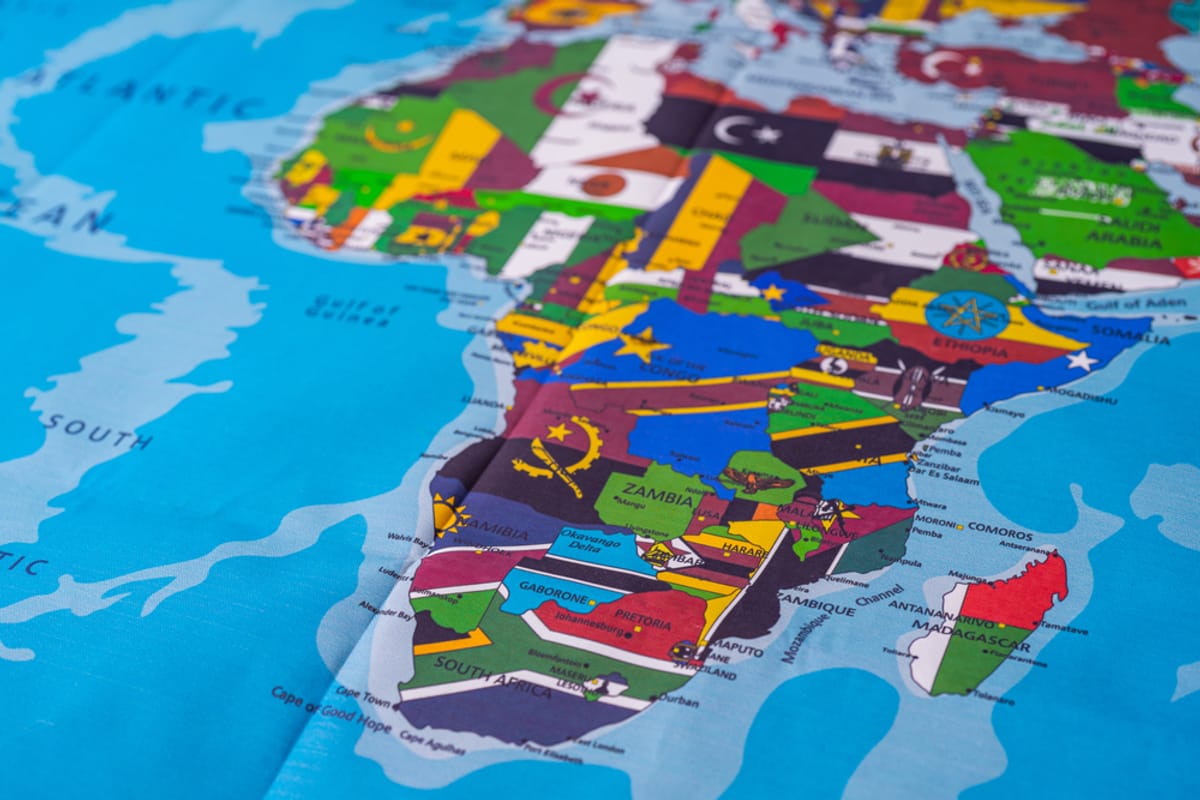
African flags displayed on a map of the continent

Africa

African nations are set to see minimal or, in some cases, negative GDP growth in the 4th quarter of 2026. Africa's construction sector stands at a critical pivot point.

Read Analysis
Flag of Russia

Russia

Russia is forecast to see GDP growth of 1.4% to 1.8% in the 4th quarter of 2026. The Russian refinery sector is suffering continuing drone attacks, causing serious disruptions almost daily from Ukraine.

Read Analysis
Middle East countries including Israel, Palestine, and Gaza in close-up focus

Middle East

This region will see 2.5% to 3.4% GDP growth in the 4th quarter of 2026. Middle East construction challenges in 2026 include the ongoing Iran conflicts, increased material costs, inflation spikes, supply-chain issues, and shortages of skilled workers.

Read Analysis